



Modern car engines are smart, powerful, and efficient. But they also produce heat and pollution if left unchecked. This is where the Exhaust Gas Recirculation system, commonly known as the EGR system, comes into play.
Many car owners hear about the EGR valve only when the check engine light comes on. Some are told to replace it immediately. Others are advised to clean it. Very few are told what it actually does.
This guide from Right Auto Spares explains the EGR system in plain language. You will learn how it works, why it is important, what problems it causes, and when it needs repair or replacement.
What Is an EGR System?
EGR stands for Exhaust Gas Recirculation. It is a setup responsible for reintroducing a tiny quantity of burnt gas back to the cylinder.
Initially, this might sound bizarre. The gas is hot and nasty, so what’s the point of an engine taking it in again?
The main reason is managing the temperature.
During combustion in the engine, extremely high heat is produced. The highest values of these temperatures result in the formation of a class of chemical substances that are called Nitrogen Oxides (NOx), which, among all, are the most significant ones together with others not so visible like Ozone, and thus, are ranked as the foremost culprits of air pollution and the health problems stemming from it.
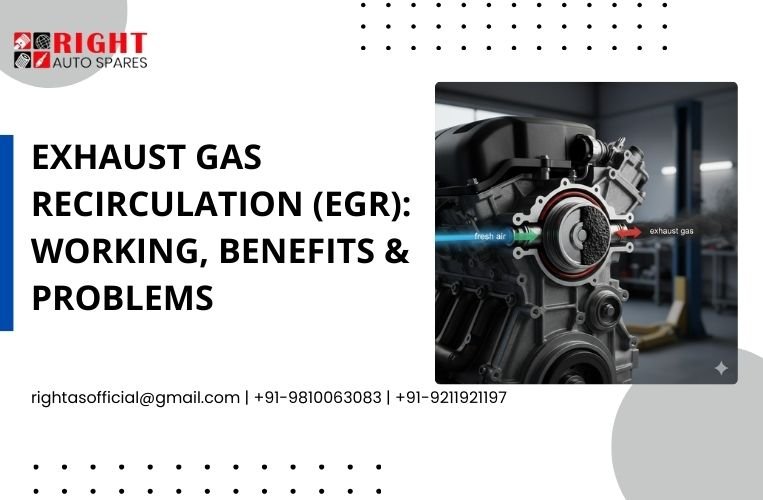
The EGR system mixes exhaust gas with fresh air. This lowers the combustion temperature and reduces pollution.
Lower heat means cleaner emissions and safer engine operation.
How the EGR System Works
The heart of the system is the EGR valve. The valve opens and closes based on engine conditions. It is controlled either by vacuum or by the engine computer, depending on the vehicle.
Here is how it works in daily driving:
Cold Engine
When the engine is cold, the EGR valve stays closed. The engine needs heat to warm up smoothly.
Idle Condition
At idle, the valve remains closed. Even a small amount of exhaust gas can cause shaking or stalling at low speed.
Cruising Speed
This is when the EGR system works best. At steady speeds, the valve opens slightly and sends exhaust gas back into the intake. This improves efficiency and reduces emissions.
Hard Acceleration
When you press the accelerator fully, the valve closes again. The engine needs clean air to produce maximum power.
The EGR valve opens only when it is helpful.
The Importance of the EGR System
A lot of people assume that the EGR system is there only for the purpose of passing the pollution tests, which is, however, incorrect.
A functional EGR system supports the engine with lots of advantages.
1. Emissions of Harmful Substances Are Reduced
The primary function of the EGR system is to cut down the production of NOx gases. This not only enables your vehicle to comply with pollution requirements but also contributes to a reduction in air pollution levels.
2. Increases Fuel Economy
The EGR system, by lowering the resistance within the engine, allows the engine to burn less fuel while in the cruising mode, thus improving fuel economy.
3. Reduces Engine Knocking
High temperature may be a reason for the fuel to burn too early, thereby producing knocking sounds and leading to the eventual destruction of the engine. Keeping the combustion temperatures under control is one of the functions of the EGR system.
4. Engine Parts Are Protected
The lower temperature results in the pistons, valves, spark plugs, and the catalytic converter experiencing less wear and tear, thus putting them under less stress.
Common EGR Problems and Why They Happen
The biggest enemy of the EGR system is carbon buildup.
Exhaust gas contains soot. Over time, this soot sticks to the EGR valve and intake passages.
As carbon builds up, the valve stops working properly.
EGR Valve Stuck Open
When the valve stays open, exhaust gas enters the engine at the wrong time.
Symptoms include:
Rough idle
Engine stalling at traffic lights
Slow pickup
The engine feels weak and unstable.
EGR Valve Stuck Closed
When the valve does not open at all, combustion temperatures rise.
Symptoms include:
Engine knocking sounds
Higher emissions
Failed pollution test
Reduced fuel efficiency
Both situations need attention.
Warning Signs of a Faulty EGR System
Your car usually gives early signs before major damage occurs.
Look out for these symptoms:
Check engine light
Rough or shaking idle
Slow acceleration
Strong fuel smell from the exhaust
Increased fuel consumption
Engine knocking noise
Ignoring these signs can lead to costly repairs later.
Can an EGR Valve Be Cleaned?
In some cases, yes.
Cleaning Works When:
• The valve is mechanical or vacuum-based
• Carbon buildup is light
• No electrical damage is present
Cleaning involves removing the valve and using a proper cleaner.
Replacement Is Better When:
• The valve is electronic
• Sensors or motors are damaged
• Error codes return after cleaning
Most modern cars need replacement, not cleaning.
Why Quality Matters in EGR Parts
Cheap EGR valves fail very quickly. They may not open or close properly.
This causes repeated engine warnings and extra repair costs.
At Right Auto Spares, EGR parts are sourced from trusted manufacturers. They match original specifications and fit perfectly. Using the right EGR valve once is better than replacing cheap ones again.
Basic EGR Maintenance Tips
• Inspect vacuum hoses regularly
• Use good-quality fuel
• Do not ignore warning lights
• Clean intake passages if needed
• Follow service recommendations
Small care can prevent big engine problems.
Final Thoughts
Understanding the EGR system helps you take action early. Early repair saves money and prevents major damage.
If you need EGR valve replacement or guidance, Right Auto Spares is here to help. We ensure the right part for your vehicle, without confusion. A clean engine runs better, lasts longer, and saves fuel.
FAQs
1. What are the effects of a defective EGR valve while driving?
A bad EGR valve, when driving, leads to rough engine running and high fuel consumption. Besides, it is going to gradually ruin the engine and the catalytic converter.
2. Does the fuel consumption get decreased by a clogging EGR valve?
Definitely. A blocked valve leads to the disruption of the air-fuel mix. As a result, the engine has to use more fuel for burning.
3. Is it more advantageous to clean or replace an EGR valve?
Cleaning is only effective in the case of old mechanical valves. Most of the time, the modern electronic EGR valves will have to be replaced.
4. What are the signs that my EGR valve is worn out?
If the indicator lights show up after cleaning, it means you have to replace them. Putting a good-quality EGR valve in place guarantees the proper functioning and emission control of the vehicle.