
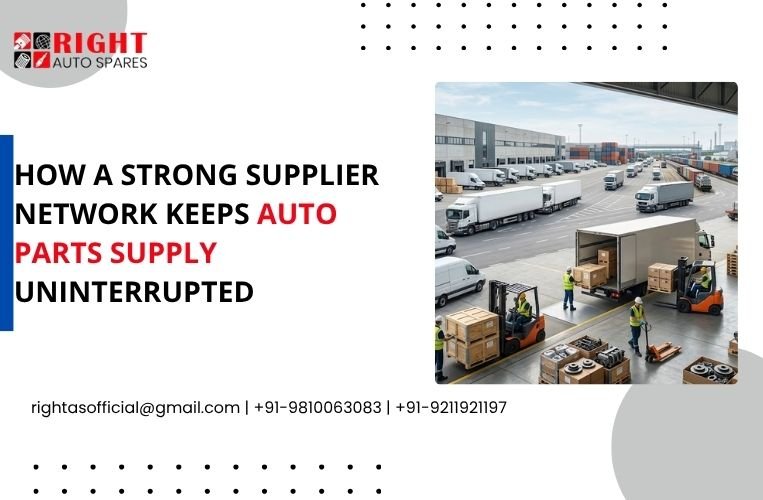



In the automotive spare parts business, supply is everything. A single delay can stall workshops, disrupt fleets, and cost distributors both revenue and credibility. For importers, wholesalers, and distributors, the real challenge is not just sourcing parts but ensuring they are always available when needed.
A strong supplier network acts as the backbone of this system. It protects businesses from sudden disruptions, stabilizes pricing, and ensures that genuine, high-quality parts reach customers without delay.
This article explains why supplier networks matter, what risks they solve, and how Right Auto Spares ensures consistent, reliable supply across markets.
Why Is a Strong Supplier Network Important in the Auto Parts Industry?
A dependable supplier network does more than just provide inventory. It builds operational stability.
1. Consistent Product Availability
When businesses depend on a single supplier, even a minor delay can create major shortages. A diversified supplier base ensures that stock remains available across categories such as engine parts, braking systems, and filters.
This consistency helps distributors meet demand without interruption.
2. Reduced Supply Chain Disruptions
Global logistics is unpredictable. Port delays, customs clearance issues, and regional conflicts can slow shipments.
With multiple sourcing options, businesses can shift procurement quickly and avoid complete breakdowns in supply.
3. Faster Delivery and Lower Lead Time
A well-connected supplier network allows access to products from different regions. This reduces dependency on long shipping routes and speeds up delivery timelines.
Faster turnaround improves customer satisfaction and strengthens long-term relationships.
4. Assured Quality and Compliance
Working with verified OEM and aftermarket manufacturers ensures that every part meets required standards.
This reduces the risk of returns, complaints, and safety issues caused by substandard components.
What Challenges Do Auto Parts Importers and Distributors Face?
Even established businesses face recurring supply chain pressures. Understanding these challenges highlights why supplier networks are critical.
Demand Fluctuations
Seasonal demand, market trends, and unexpected spikes can create sudden shortages. Without backup suppliers, businesses struggle to respond quickly.
Logistics and Trade Barriers
International shipping involves complex regulations, duties, and documentation. Delays at any stage can disrupt supply schedules.
Price Instability
Changes in raw material costs and currency rates directly affect procurement pricing. Relying on a single supplier limits negotiation power.
Risk of Counterfeit Parts
The global auto parts market is flooded with low-quality or fake components. These not only affect performance but can damage brand reputation.
How a Strong Supplier Network Solves These Problems
Multiple Sourcing Options
If one supplier faces delays, businesses can switch to another without affecting operations. This keeps inventory flow steady.
Better Cost Management
Sourcing from different regions allows price comparison and negotiation. Businesses can secure better margins without compromising quality.
Improved Risk Distribution
Dependence on one source increases vulnerability. A network spreads risk across suppliers, making the supply chain more resilient.
Reliable Quality Control
Established supplier partnerships ensure that only tested and certified products enter the distribution chain.
How Do You Choose a Reliable Auto Parts Supplier?
Selecting the right supplier is one of the most important decisions for any distributor or importer. A strong supplier should offer more than just competitive pricing.
- Work with certified OEM and trusted aftermarket manufacturers
- Maintain consistent stock availability across product categories
- Have experience in international shipping and documentation
- Offer transparent communication and clear timelines
- Provide quality assurance and proper product verification
A supplier that meets these criteria supports long-term stability rather than short-term gains.
OEM vs Aftermarket Parts: What Should Distributors Choose?
Distributors often face a common question when sourcing auto parts.
OEM parts are produced by the original manufacturer and match the exact specifications of the vehicle. They offer high reliability and consistent performance.
Aftermarket parts are made by third-party manufacturers. They are usually more cost-effective and widely available, with varying quality depending on the supplier.
For most distributors, a balanced approach works best. OEM parts ensure trust and precision, while high-quality aftermarket parts improve margins and availability.
How Do Distributors Manage Inventory Without Stock Shortages?
Managing inventory in the auto parts business requires planning and flexibility.
- Tracking fast-moving and slow-moving parts separately
- Maintaining safety stock for high-demand items
- Using multiple suppliers to avoid dependency
- Monitoring market demand and seasonal trends
- Planning procurement in advance to reduce delays
A strong supplier network plays a direct role in making this system work efficiently.
How Importers and Distributors Benefit Directly
Steady Inventory Flow
A strong supplier base ensures that stock levels remain stable, even during high-demand periods.
Faster Order Fulfillment
Quick access to parts reduces waiting time for customers, improving retention and trust.
Scalability for Growth
Businesses can expand into new markets or product categories without worrying about supply limitations.
Stronger Market Reputation
Consistent delivery and quality build credibility, which is essential in the automotive aftermarket industry.
Why Right Auto Spares Is a Reliable Partner for Auto Parts Supply
Extensive Global Supplier Network
Right Auto Spares collaborates with trusted OEMs and high-quality aftermarket manufacturers across multiple regions. This ensures the continuous availability of parts, even during peak demand cycles.
Strong Export and Logistics Capabilities
With experience in global shipping and documentation, the company ensures the smooth movement of goods across borders. Orders are processed efficiently, reducing delays and uncertainty.
Focused B2B Approach
Right Auto Spares works closely with importers, distributors, and wholesalers. The focus remains on bulk supply, consistency, and long-term partnerships rather than one-time transactions.
Wide Range of Automotive Components
- Brake pads, linings, and rotors
- Engine components such as pistons and gaskets
- Suspension and steering parts
- Oil, air, and fuel filters
- Clutch and transmission systems
This allows buyers to source multiple categories from a single, dependable supplier.
What Should You Look for in a Strong Auto Parts Supplier Network?
- Multiple sourcing locations
- Verified manufacturer partnerships
- Consistent product quality standards
- Efficient logistics and delivery timelines
- Transparent pricing and communication
Conclusion
In the automotive spare parts industry, consistency defines success. Businesses that rely on limited sourcing often struggle with delays, pricing issues, and stock shortages.
A strong supplier network removes these risks. It ensures steady inventory, faster delivery, and better cost control. More importantly, it builds trust with customers who depend on a timely and reliable supply.
Right Auto Spares brings this advantage through a well-established global network, efficient logistics, and a clear focus on quality. For importers and distributors looking to strengthen their supply chain, the right supplier network is not just helpful, it is essential.
FAQs
What is a supplier network in the auto parts industry?A supplier network is a group of manufacturers and vendors that provide automotive components, helping businesses maintain consistent stock and reduce supply risks.
Why do distributors prefer multiple suppliers instead of one?Multiple suppliers reduce dependency, improve flexibility, and ensure continuous inventory even during disruptions.
How do auto parts distributors ensure continuous supply?They use multiple sourcing options, maintain safety stock, and plan procurement based on demand trends.
What is the biggest risk in auto parts supply chains?Overdependence on a single supplier, which can lead to major disruptions during delays or shortages.
How can importers avoid counterfeit auto parts?By working with verified and trusted suppliers who follow strict quality standards and certifications.
What makes Right Auto Spares a reliable supplier?Its global supplier network, strong logistics system, and focus on quality make it a dependable partner for bulk auto parts sourcing.