
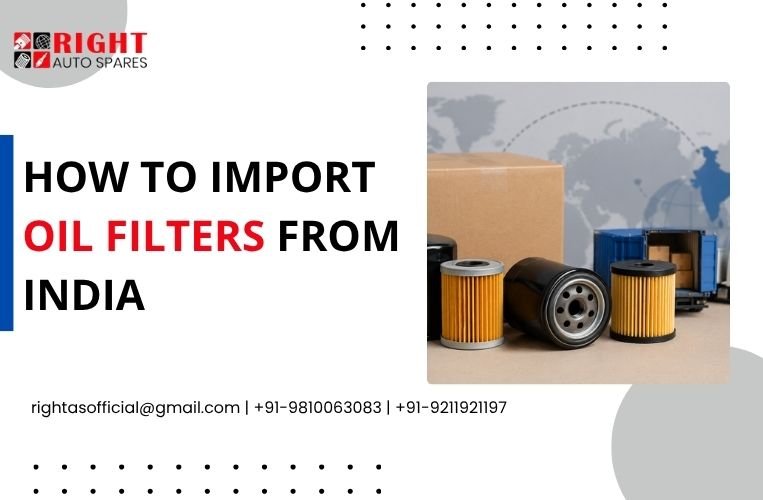


Importing oil filters from India has become a preferred sourcing strategy for distributors, wholesalers, automotive spare parts dealers, fleet operators, and industrial buyers worldwide. If you are searching for how to import oil filters from India, you are likely looking for a reliable supplier, competitive pricing, consistent product quality, and a smooth import process.
India is one of the world's leading manufacturers and exporters of automotive and industrial filtration products. With a strong manufacturing base, extensive product range, and growing export infrastructure, Indian suppliers serve customers across the UAE, Saudi Arabia, Africa, Europe, Southeast Asia, and many other global markets.
Whether you are importing oil filters for passenger vehicles, commercial trucks, agricultural equipment, generators, or industrial machinery, understanding the import process can help you reduce risks, control costs, and build a dependable supply chain.
At Right Auto Spares, we work with buyers looking for high-quality filtration solutions and aftermarket spare parts. This guide explains everything you need to know about importing oil filters from India, from supplier selection to customs clearance.
Why Import Oil Filters from India?
India has established itself as a trusted sourcing destination for automotive and industrial filtration products. Buyers across international markets choose Indian suppliers because they offer a combination of quality, affordability, and export expertise.
Key Benefits of Importing Oil Filters from India
|
Advantage |
Benefit for Buyers |
|
Competitive Pricing |
Lower sourcing costs compared to many global markets |
|
Wide Product Availability |
Filters for cars, trucks, tractors, generators, and industrial equipment |
|
OEM-Compatible Products |
Suitable replacements for various international applications |
|
Bulk Supply Capability |
Supports wholesalers and distributors |
|
Export Experience |
Established logistics and documentation support |
|
Product Variety |
Multiple filter types from a single supplier |
For businesses looking to improve margins while maintaining quality, importing oil filters from India can be a cost-effective long-term solution.
What Are Oil Filters and Why Are They Important?
An oil filter is designed to remove dirt, metal particles, sludge, and contaminants from engine oil before it circulates through the engine.
A quality oil filter helps:
Protect engine components
Maintain clean lubrication
Improve engine efficiency
Reduce wear and tear
Extend engine life
Lower maintenance costs
Oil filters are essential for passenger vehicles, commercial fleets, construction equipment, agricultural machinery, generators, and industrial engines.
Who Imports Oil Filters from India?
A wide range of businesses and industries import oil filters.
Common Buyers Include:
Automotive spare parts distributors
Wholesale auto parts suppliers
Fleet maintenance companies
Industrial equipment suppliers
Construction equipment dealers
Agricultural machinery distributors
Generator maintenance providers
Online automotive retailers
As global demand for replacement filters continues to grow, more businesses are turning to India as a reliable sourcing destination.
Step 1: Identify Your Product Requirements
Before contacting suppliers, clearly define what you need.
Important considerations include:
Vehicle or equipment applications
OEM part numbers
Filter dimensions
Expected order volume
Target market requirements
Packaging preferences
Branding requirements
Having clear specifications helps suppliers provide accurate quotations and product recommendations.
Step 2: Find a Reliable Oil Filter Supplier in India
Choosing the right supplier is one of the most important parts of the import process.
A dependable supplier should offer:
Consistent product quality
Export experience
Competitive pricing
Technical support
Product documentation
OEM cross references
Reliable delivery schedules
At Right Auto Spares, we understand the importance of supplying filtration products that meet both performance expectations and market requirements.
Step 3: Verify Oil Filter Specifications
Many buyers make the mistake of selecting filters based only on appearance or part number.
Before placing an order, verify:
|
Specification |
Importance |
|
Thread Size |
Ensures proper installation |
|
Outer Diameter |
Determines compatibility |
|
Height |
Required for correct fitment |
|
Micron Rating |
Indicates filtration efficiency |
|
Bypass Valve Setting |
Supports engine protection |
|
Application Reference |
Confirms vehicle compatibility |
Technical verification helps avoid compatibility issues and customer complaints.
Step 4: Request Cross References and Product Catalogs
Professional suppliers typically provide:
Product catalogs
OEM references
Cross-reference guides
Technical specifications
Application charts
Cross-reference information helps distributors identify equivalent oil filters for multiple brands and applications.
This is particularly useful for businesses serving different vehicle segments.
Step 5: Request Product Samples
Before placing a bulk order, request product samples for evaluation.
Review:
Build quality
Filtration media
Fitment accuracy
Packaging quality
Product finish
Labeling standards
Testing samples before committing to larger orders helps reduce sourcing risks.
Step 6: Understand Minimum Order Quantities (MOQ)
Most manufacturers and exporters have minimum order requirements.
MOQ may vary based on:
Product type
Filter category
Custom branding requirements
Packaging specifications
Export destination
Discuss MOQ requirements early to avoid misunderstandings during negotiations.
Step 7: Compare Pricing and Payment Terms
Oil filter pricing depends on several factors.
Key Pricing Factors
Product specifications
Order quantity
Packaging requirements
Shipping method
Destination country
Common Payment Methods
|
Payment Method |
Common Usage |
|
Telegraphic Transfer (TT) |
Widely used for international trade |
|
Letter of Credit (LC) |
Suitable for larger transactions |
|
Advance Payment |
Common for initial orders |
|
Partial Advance Payment |
Often used with repeat buyers |
Always clarify payment terms before confirming an order.
Step 8: Confirm Export Documentation
Accurate documentation helps ensure smooth customs clearance.
Common export documents include:
|
Document |
Purpose |
|
Commercial Invoice |
Purchase and transaction details |
|
Packing List |
Shipment information |
|
Bill of Lading |
Shipping document |
|
Certificate of Origin |
Confirms manufacturing country |
|
Export Declaration |
Regulatory compliance |
|
Insurance Certificate |
Cargo protection |
Documentation requirements may differ depending on the importing country.
Step 9: Choose the Right Shipping Method
Selecting the appropriate shipping method affects both cost and delivery timelines.
Sea Freight
Suitable for:
Bulk shipments
Container loads
Lower shipping costs
Air Freight
Suitable for:
Urgent orders
Smaller shipments
Faster delivery requirements
|
Shipping Method |
Cost |
Delivery Speed |
|
Sea Freight |
Lower |
Longer transit time |
|
Air Freight |
Higher |
Faster transit time |
Most distributors and wholesalers prefer sea freight for larger orders.
Step 10: Complete Customs Clearance
Once the shipment reaches its destination, customs authorities review documentation and applicable duties.
To avoid delays:
Verify all documents are accurate
Confirm product classifications
Understand import regulations
Work with experienced customs agents
Review duty and tax requirements
A smooth customs process helps prevent unnecessary delays and additional costs.
Common Challenges When Importing Oil Filters
Incorrect Product Matching
Choosing the wrong filter specifications can create fitment issues and customer dissatisfaction.
Quality Inconsistencies
Working with unverified suppliers may lead to quality concerns.
Documentation Errors
Incorrect paperwork can delay customs clearance.
Supply Chain Delays
Poor logistics planning may affect inventory management.
Price-Focused Purchasing
Choosing suppliers solely based on low pricing often creates long-term quality issues.
Why Buyers Choose Right Auto Spares
Businesses sourcing filtration products need a supplier they can trust.
At Right Auto Spares, we focus on supplying dependable filtration products for global buyers.
Our Product Range Includes
Oil filters
Fuel filters
Air filters
Hydraulic filters
Heavy-duty industrial filters
What Sets Us Apart
Wide product availability
OEM-compatible solutions
Technical support
Export assistance
Bulk order capability
Competitive pricing
Consistent quality standards
Our goal is to help distributors, wholesalers, and industrial buyers source reliable filtration products with confidence.
Tips for Successful Oil Filter Importing
|
Best Practice |
Why It Matters |
|
Verify Supplier Credentials |
Reduces sourcing risks |
|
Request Technical Data |
Ensures compatibility |
|
Test Samples |
Confirms quality standards |
|
Understand Import Regulations |
Prevents customs issues |
|
Review Documentation Carefully |
Avoids shipment delays |
|
Build Long-Term Supplier Relationships |
Improves supply stability |
Final Thoughts
Importing oil filters from India offers businesses an opportunity to access high-quality filtration products at competitive prices while benefiting from India's strong manufacturing and export ecosystem. By following a structured sourcing process, verifying product specifications, and partnering with a reliable supplier, importers can build a stable and profitable supply chain.
As global demand for automotive and industrial filtration products continues to grow, India remains one of the most attractive sourcing destinations for distributors, wholesalers, fleet operators, and industrial buyers.
If you are looking for a trusted partner for oil filters, fuel filters, air filters, and industrial filtration products, Right Auto Spares provides the expertise, product range, and export support needed to help your business grow in competitive markets.
Frequently Asked Questions
How can I import oil filters from India?
To import oil filters from India, identify your product requirements, select a reliable supplier, verify specifications, request samples, finalize pricing, complete export documentation, arrange shipping, and clear customs in your destination country.
Why do businesses import oil filters from India?
Businesses import oil filters from India because of competitive pricing, wide product availability, strong manufacturing capabilities, export expertise, and access to quality OEM-compatible filtration solutions.
What documents are required to import oil filters from India?
Most shipments require a commercial invoice, packing list, bill of lading, certificate of origin, export declaration, and other documents depending on the destination country's regulations.
How do I choose the best oil filter supplier in India?
Look for suppliers with proven export experience, product quality standards, technical expertise, OEM compatibility support, and reliable delivery capabilities.
Are oil filters manufactured in India suitable for international markets?
Yes. Indian manufacturers and exporters supply oil filters for passenger vehicles, commercial trucks, agricultural machinery, generators, and industrial equipment used across global markets.