
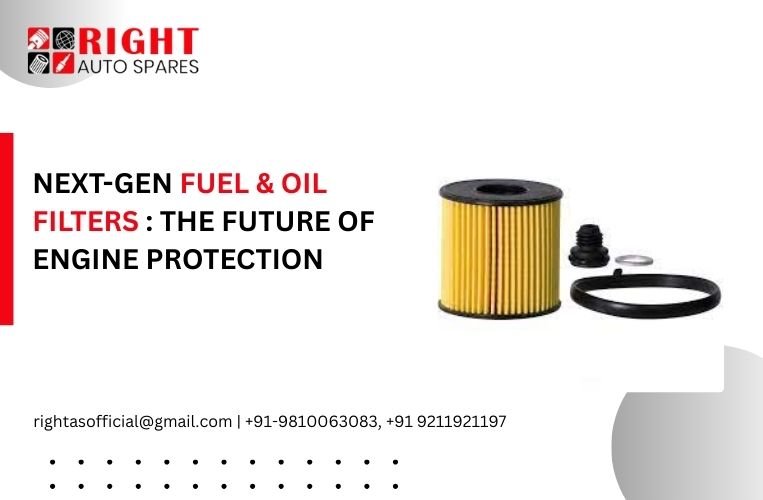



In the world of automotive engineering, innovations are crucial and urgent. Be it electric drivetrains or smart diagnostics, the focus is always on getting the performance, efficiency, and sustainability right. Yet, an aspect that often goes unnoticed—but very critical-is engine protection. Without effective fuel and oil filters, even the most advanced engines can suffer severe damage, leading to costly repairs and reduced lifespan.
With an evolution in technology, the filtration system has also developed. Fuel and oil filters these days are smart, sustainable, and high-performance solutions—beyond merely blocking out dirt and impurities—that totally redefine engine protection.
Here in this blog, we shall try to understand how next-gen fuel-and-oil filters are revolutionizing automotive industry; why they matter; and what innovations are expected next.
Why Engine Protection Is More Important Now Than Ever Before
Modern engines are more advanced, compact, and very powerful. This, in turn, makes the engines so sensitive to contaminants.
Fuel contaminants like dust, rust particles, and water can clog injectors and hinder combustion efficiency.
Oil impurities such as carbon deposits, metal shavings, and sludge wear down machinery quickly.
Even a tiny particle can lead to greater performance, higher emissions, and costly downtime
That’s why next-gen filters are no longer just “accessories.” They are frontline defenders against optimal engine performance and durability.
The Evolution of Fuel Filters
Fuel filters have come a long way from simple mesh screens. The ultra-high filtration standards of today's fuel injection systems, necessitated by high pressure and fragile components, must be met.
Key Innovations in Fuel Filters:
Multi-Layer Filtration Media
In the past, single-layer filters were common; nowadays, modern filter use multi-layer synthetic fibers to trap particles of differing sizes.
Thus, it assures clean fuel flow and long service life of the filter.
Water Separation Technology
Water contamination, in particular, hinders diesel engines.
Next-generation filters use hydrophobic coatings and multi-stage water separation mechanisms to keep the fuel pure.
Compact, High-Efficiency Designs
Smaller engines require compact filters without compromising on performance.
Engineers are designing filters that fit into tighter spaces while improving flow dynamics.
Smart Monitoring Sensors
In some vehicles of the modern era, sensors have been integrated into filters to measure the clogging level and provide an alert to the driver for maintenance.
This removes all guesswork and ensures timely replacement.
The Evolution of Oil Filters
Just like fuel filters, oil filters have also undergone massive transformation. Since oil is the lifeblood of the engine, keeping it clean is essential for performance and longevity.
Key Innovations in Oil Filters:
Synthetic Filter Media
Traditional cellulose filters are being replaced with synthetic fibers that capture smaller particles more effectively.
Bypass Valves for Efficiency
To avoid oil starvation, modern filters include bypass valves that maintain flow even when the filter is clogged.
Eco-Friendly, Long-Life Filters
Next-gen oil filters are designed to last longer, reducing waste and aligning with sustainability goals.
Integrated Cooling and Pressure Regulation
Some advanced systems combine filtration, cooling, and pressure stabilization into one unit for maximum engine protection.
Smart Filters: The Future of Engine Filtration
The automotive world is moving toward digitization and IoT (Internet of Things), and filters are no exception.
Here’s what the future holds:
IoT-Enabled Filters → The sensors send the real-time data to either the dashboard or a mobile app, notifying drivers when the filters are dirty.
Predictive Maintenance → Using AI-based analytics, the system can predict a failure in the filter and thus, a timely replacement can be done for it.
Self-Cleaning Filters → Some approaches are already in sight where the filter could basically regenerate itself similarly to DPFs (Diesel Particulate Filters).
Eco-Friendly Materials → Biodegradable and recyclable filter media will reduce the environmental impact of millions of discarded filters.
The Role of Filters in Sustainability
As greener mobility becomes the new wave all over the planet, filters will play an even more crucial role:
Reducing Emissions: Cleaner combustion means fewer harmful gases.
Increasing Fuel Efficiency: Clean fuel and oil ensure that maximum performance is achieved for every drop of fuel.
Longer Engine Life: Fewer breakdowns mean fewer replacements, which supports a circular economy.
A number of manufacturers are already working on filter technologies for hybrid and electric vehicles, which concentrate on thermal management and cooling fluids for batteries.
Industry Innovation: Next-Gen Filters in Action
Automotive giants and filter manufacturers are heavily investing in next-gen filtration R&D. Some trends worth noting:
Nanotechnology in Filters → Captures ultra-fine particles that traditional filters miss.
Modular Filter Systems → Customizable units that adapt to different vehicles and driving conditions.
High-Efficiency Particulate Filters (HEPF) → Designed for future-ready vehicles with minimal emissions.
As vehicles become smarter, so will their filtration systems. The day is not far when filters will be as tech-driven as the engines they protect.
Challenges in Next-Gen Filtration
While the future is promising, there are challenges too:
Cost: Advanced materials and sensor integration increase filter prices.
Maintenance Awareness: Filter changes are still neglected by a good number of drivers.
Compatibility: For market adoption, new designs have to be backward compatible with older engines.
Demand for these advanced filtration systems, however, is set to grow by leaps and bounds, with engines evolving and regulations getting stringent.
Final Thoughts
Next-gen fuel and oil filters will adequately meet applications for engine protection better than basic filtration. These filters will greatly affect the operation, age, and sustainability contribution of engines thanks to recent advancements in materials, intelligent sensors, and eco-friendly designs.
Automakers should incorporate these technologies not just for improved performance but also to satisfy emission regulations and consumer expectations and so be the main engine of innovation inside the sector.
For drivers, it implies comfort, lower upkeep expenses, and a longer engine life.
To put it simply, the future of mobility depends on the next-gen fuel and oil filter—it’s becoming a key player in the future of mobility.