
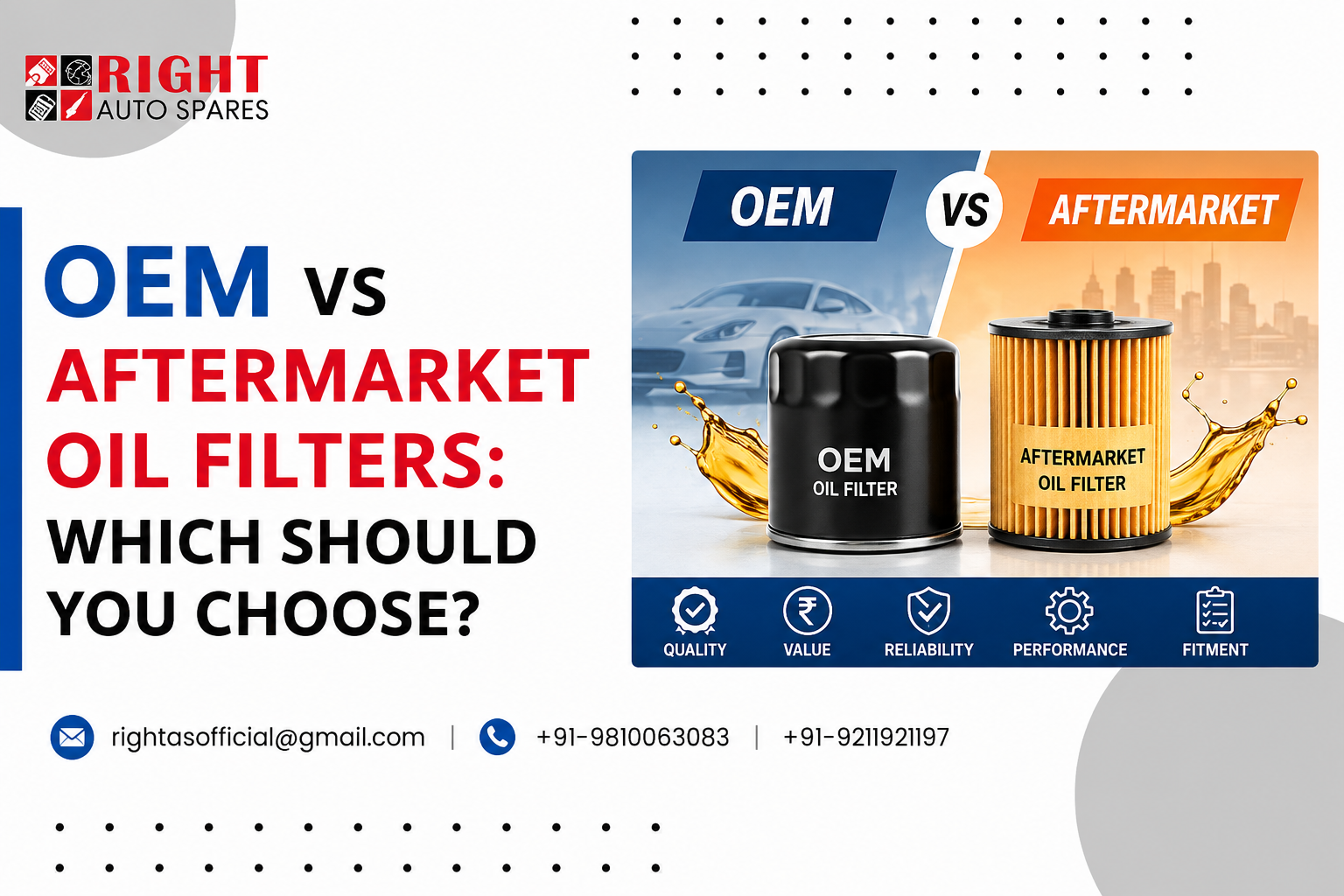

OEM oil filters are made to meet the specifications of a vehicle or equipment manufacturer, while aftermarket oil filters are produced by independent filter manufacturers. The better choice depends on the engine, filter specifications, operating conditions, warranty requirements, and the quality of the replacement filter.
For distributors, workshops, fleet operators, and importers, the decision should go beyond the brand name or purchase price. Filter construction, filtration performance, oil flow, fitment, service interval, and supplier reliability all affect the value of an oil filter over its working life.
This guide explains the practical differences between OEM and aftermarket oil filters, what buyers should check before ordering, and when each option makes sense.
What Is an OEM Oil Filter?
An OEM, or Original Equipment Manufacturer, oil filter is supplied by the vehicle or equipment manufacturer or made to its specified requirements. The filter is designed for a particular engine or equipment application and is selected to meet the manufacturer's stated performance and fitment requirements.
OEM filters are commonly preferred when:
- The equipment is under warranty
- The manufacturer specifies a particular filter
- The application has strict maintenance requirements
- The buyer wants a direct replacement based on the original part number
- Equipment documentation specifically requires an OEM filter
For commercial vehicles, generators, construction equipment, and other diesel applications, the correct OEM reference is often the simplest starting point when identifying a replacement filter.
What Is an Aftermarket Oil Filter?
An aftermarket oil filter is manufactured by a company other than the vehicle or equipment manufacturer. Independent filtration companies produce aftermarket filters for a wide range of automotive, commercial, agricultural, construction, and industrial applications.
A quality aftermarket filter is designed to meet the requirements of its intended application. Some manufacturers also produce filters that correspond to OEM part numbers through established cross-reference systems.
Aftermarket filters are often considered when buyers want:
- More supplier and brand options
- Competitive pricing
- Wider availability
- Bulk purchasing flexibility
- Replacement options for older equipment
- Filters for mixed vehicle or equipment fleets
The key point is that "aftermarket" describes the source of the product. It does not, by itself, tell you whether a filter is good or poor quality.
OEM vs Aftermarket Oil Filters: Key Differences
The most useful way to compare OEM and aftermarket oil filters is to look at the factors that affect actual use.
| Factor | OEM Oil Filter | Aftermarket Oil Filter |
|---|---|---|
| Manufacturer | Vehicle or equipment manufacturer or approved source | Independent filtration manufacturer |
| Fitment | Designed for specified OEM application | Designed around stated application and cross-reference |
| Part Number | Original equipment reference | Own part number, often cross-referenced to OEM numbers |
| Quality | Built to the manufacturer's stated requirements | Quality varies by manufacturer and product range |
| Price | Often carries a higher purchase price | Often offers more pricing options |
| Availability | Depends on OEM distribution | Can provide broader sourcing options |
| Fleet Use | Useful where OEM specifications are mandatory | Useful for approved replacement and mixed fleets |
| Warranty Considerations | Straightforward choice where OEM specification is required | Check warranty and manufacturer requirements before substitution |
| Selection | Usually tied to the equipment brand | Often available across multiple equipment brands |
| Best Buying Approach | Verify OEM part number and application | Verify cross-reference, specifications, and manufacturer quality |
This comparison shows why there is no universal answer to whether OEM or aftermarket oil filters are better. The correct choice depends on the application and the filter itself.
Does an Aftermarket Oil Filter Work as Well as an OEM Filter?
A high-quality aftermarket oil filter can be suitable for an application when it is correctly matched to the engine and meets the required specifications. However, aftermarket products differ from one manufacturer to another, so buyers should not assume that every filter with the same cross-reference offers identical performance.
Before selecting an aftermarket filter, check:
- OEM part number
- Filter dimensions
- Thread size
- Gasket or seal specifications
- Filtration requirements
- Oil flow requirements
- Pressure-related specifications
- Manufacturer recommendations
- Intended engine or equipment application
A correct cross-reference is a starting point. It should be supported by reliable product information from the filter manufacturer.
Why Correct Oil Filter Fitment Matters
An oil filter has to work correctly within the engine's lubrication system. Choosing a filter based only on its physical appearance can create problems.
Two filters might look similar while having different:
- Thread specifications
- Seal dimensions
- Filter capacity
- Internal construction
- Bypass valve specifications
- Anti-drainback arrangements
- Application requirements
A filter that physically fits the mounting point is not automatically the correct filter.
For bulk buyers, checking the OEM part number and application before ordering is one of the simplest ways to reduce incorrect shipments and costly returns.
OEM Oil Filters: When Are They the Better Choice?
OEM filters are often the practical choice when equipment requirements are closely tied to the original manufacturer's specifications.
1. Equipment Under Warranty
If a vehicle or machine is under warranty, review the manufacturer's maintenance requirements before using an alternative filter. Follow the applicable warranty and service documentation.
2. Critical Equipment
For equipment where maintenance requirements are tightly controlled, buyers often prefer the manufacturer's specified filter to simplify procurement and documentation.
3. Exact Replacement Requirements
If maintenance records identify a specific OEM part number, using the same reference can make replacement straightforward.
4. Manufacturer-Specific Applications
Some engines and equipment have specific filtration requirements. In these cases, the manufacturer's documentation should guide the selection.
Aftermarket Oil Filters: When Do They Make Sense?
Quality aftermarket filters can be useful for businesses managing replacement parts across larger fleets.
1. Cost Management
Aftermarket products give buyers more options when comparing purchase prices across manufacturers and suppliers.
However, price should be assessed alongside quality, service life, availability, and return rates.
2. Mixed Fleets
A distributor or fleet operator working with several equipment manufacturers may find aftermarket cross-reference systems useful for simplifying procurement.
3. Older Equipment
For older vehicles and machinery, aftermarket suppliers often provide replacement options where original distribution has become less convenient.
4. Bulk Procurement
Importers, distributors, and workshops often compare multiple filter manufacturers when purchasing larger quantities. This creates more flexibility in sourcing and inventory planning.
What Should You Check Before Buying an Aftermarket Oil Filter?
A low price is not enough to establish whether an aftermarket oil filter is suitable.
Use this checklist before approving a bulk order:
1. Confirm the OEM reference
Start with the original equipment part number whenever possible.
2. Check the application
Confirm the engine, vehicle, machine, model, and relevant production details.
3. Verify the cross-reference
Use manufacturer or supplier cross-reference information rather than relying on an unverified online listing.
4. Review technical specifications
Check the specifications that matter for the particular engine and filtration system.
5. Check product identification
Confirm the manufacturer's part number, packaging, labeling, and other product details.
6. Ask about quality control
For commercial purchases, understand how products are inspected and documented.
7. Confirm commercial terms
Check minimum order quantities, lead times, packaging, warranty terms, and return conditions before placing a larger order.
This process helps buyers avoid choosing a filter simply because its dimensions or part number appear similar.
Oil Filter Quality Matters More Than the OEM or Aftermarket Label
The OEM versus aftermarket debate often focuses too heavily on the label.
For buyers, the more useful question is whether the filter is correct for the application and supplied by a reliable manufacturer or supplier.
An aftermarket filter from an established filtration manufacturer may be a sensible choice for an approved application. A poorly specified replacement filter can create problems even when its purchase price is attractive.
Look for evidence of:
- Correct application
- Consistent manufacturing
- Appropriate filter media
- Correct seals and construction
- Suitable flow characteristics
- Reliable product identification
- Manufacturer documentation
Avoid making technical claims about filtration efficiency or service life unless the manufacturer provides supporting data for the specific filter.
OEM vs Aftermarket Oil Filters for Fleet Operators
Fleet operators have a different purchasing challenge from individual vehicle owners. They need to balance maintenance requirements with inventory, operating costs, and vehicle availability.
A fleet manager should consider:
| Fleet Requirement | What to Prioritize |
|---|---|
| Vehicles under warranty | Manufacturer maintenance requirements |
| Large mixed fleet | Reliable cross-reference information |
| High filter consumption | Consistent supply and commercial pricing |
| Heavy-duty operation | Correct application and specifications |
| Multiple vehicle models | Inventory compatibility and part-number control |
| Remote operations | Supply reliability and planned stock |
| Cost-sensitive maintenance | Total cost rather than unit price alone |
For a fleet, an inexpensive filter is not necessarily economical if incorrect fitment leads to returns, delays, or repeated purchasing.
Common Mistakes When Choosing Oil Filters
Choosing by Size Alone
A filter that looks identical to the original does not necessarily have the same specifications.
Using an Unverified Cross-Reference
Online listings often contain incomplete or inconsistent application information. Verify important part numbers before placing an order.
Selecting Only on Price
The purchase price is one part of the buying decision. Quality, availability, service requirements, and supplier reliability also matter.
Ignoring the Operating Environment
Heavy-duty vehicles and machinery may operate under demanding conditions. The replacement filter should be appropriate for the specified application and maintenance schedule.
Ordering in Bulk Before Checking Samples
For a new supplier or unfamiliar aftermarket brand, confirming the product and application before committing to a large order helps reduce procurement risk.
How Right Auto Spares Can Help With Oil Filter Sourcing
Right Auto Spares supplies automotive and industrial spare parts for businesses looking for genuine OEM and aftermarket options. For oil filter requirements, buyers should provide the OEM part number, equipment or vehicle details, required quantity, and destination wherever possible.
This information helps narrow down the correct application and makes it easier to assess available sourcing options.
For distributors, workshops, fleet operators, and importers, a clear part-number-based enquiry also reduces the risk of receiving a visually similar filter that is unsuitable for the intended application.
Final Takeaway
Choosing between OEM and aftermarket oil filters depends on the application, required specifications, warranty conditions, and supplier reliability. OEM filters offer a direct match to the manufacturer's requirements, while quality aftermarket filters provide additional sourcing and pricing options. Always verify the OEM part number, application, and technical specifications before ordering. Right Auto Spares helps businesses source genuine OEM and quality aftermarket oil filters based on their specific requirements.
Frequently Asked Questions
1. Which is better, OEM or aftermarket oil filters?
OEM oil filters are a direct choice for the manufacturer's specified application. A quality aftermarket oil filter can also be suitable when it matches the correct OEM part number, application, and required specifications.
2. Are aftermarket oil filters as good as OEM filters?
A quality aftermarket oil filter can provide reliable performance when it is correctly designed and matched to the application. Quality varies between manufacturers, so buyers should verify product specifications and manufacturer information.
3. How do I choose the right oil filter for my vehicle?
Check the vehicle or engine model and OEM filter part number first. Then verify the aftermarket cross-reference, dimensions, thread, seal, and other application-specific specifications before purchasing.
4. Are OEM oil filters worth the extra cost?
OEM filters can be worthwhile when the manufacturer specifies them, the equipment is under warranty, or exact OEM replacement is preferred. For suitable applications, a quality aftermarket filter can offer a more competitive purchasing option.
5. Can I replace an OEM oil filter with an aftermarket filter?
Yes, where the aftermarket filter is confirmed as a suitable replacement for the specific application. Verify the OEM part number, manufacturer cross-reference, technical specifications, and applicable warranty requirements before substitution.
6. Where can I source OEM and aftermarket oil filters in bulk?
Right Auto Spares supplies genuine OEM and aftermarket automotive and industrial spare parts. Buyers should provide the OEM part number, vehicle or equipment details, required quantity, and destination to help identify suitable sourcing options.