



The answer is not always straightforward because both options have their own advantages depending on the vehicle, budget, and driving requirements.
Many drivers assume OEM parts are always superior, while others believe aftermarket parts offer better value. In reality, the right choice depends on the quality of the part, the condition of the vehicle, and the reliability of the supplier.
At Right Auto Spares, we help customers choose the most suitable parts for their vehicles by offering both genuine OEM and high-quality aftermarket auto parts for leading brands, including Toyota, Honda, Hyundai, Kia, Ford, Tata Motors, Mahindra, Maruti Suzuki, Volkswagen, and Skoda Auto.
This guide explains the real difference between OEM and aftermarket parts, their advantages, drawbacks, and how to choose the right option for your vehicle.
What Are OEM Parts?
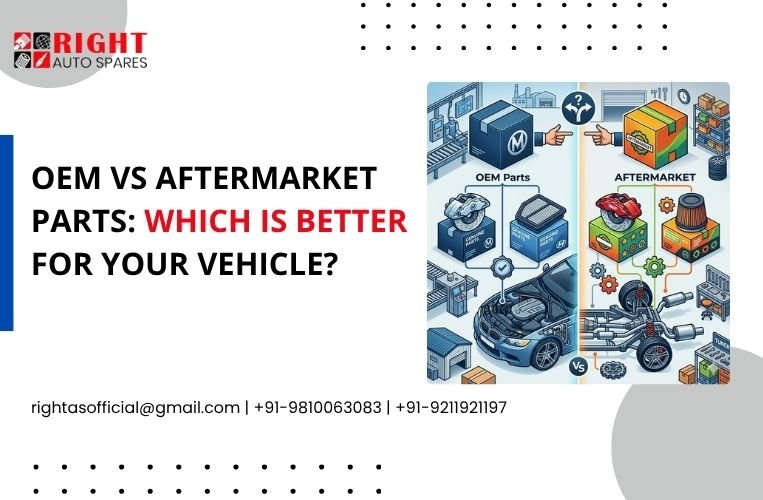
OEM stands for Original Equipment Manufacturer. These parts are designed according to the original specifications of the vehicle manufacturer.
In simple words, OEM parts are made to match the exact fit, quality, and performance standards that came with the vehicle when it was new.
For example, if you own a Toyota Fortuner or Honda City and need a brake pad replacement, OEM parts are designed specifically for that vehicle model.
Many vehicle owners prefer OEM parts because they offer:
- Exact fitment
- Consistent quality
- Reliable performance
- Manufacturer-level compatibility
OEM parts are commonly used for:
- Engine components
- Braking systems
- Electrical systems
- Transmission components
What Are Aftermarket Parts?
Aftermarket parts are manufactured by third-party companies instead of the original vehicle manufacturer.
These parts are designed to function like OEM components and are available in multiple quality levels. High-quality aftermarket parts can often perform as well as OEM parts, especially when sourced from trusted suppliers.
Today’s aftermarket industry has improved significantly. Many premium aftermarket brands produce components that meet or exceed OEM standards.
Aftermarket parts are widely used for:
- Filters
- Brake pads
- Suspension systems
- Lighting components
- Routine maintenance parts
For vehicles such as Hyundai Creta, Maruti Swift, Tata Nexon, or Ford EcoSport, aftermarket parts are commonly used because they offer affordability and wide availability.
OEM vs Aftermarket Parts: The Main Differences
Understanding the differences between OEM and aftermarket parts helps vehicle owners make smarter decisions.
| Feature | OEM Parts | Aftermarket Parts |
|---|---|---|
| Manufacturer | Vehicle manufacturer or authorized supplier | Third-party manufacturer |
| Fitment | Exact factory fit | May vary by brand |
| Price | Usually higher | Usually more affordable |
| Availability | Limited to authorized channels | Widely available |
| Variety | Limited options | Multiple choices |
| Warranty | Manufacturer-backed | Depends on brand |
Are OEM Parts Always Better?
Not necessarily.
OEM parts provide consistency and exact compatibility, but that does not automatically mean they are always the best option for every repair.
In many situations, premium aftermarket parts offer excellent durability and value.
For example:
- OEM brake pads for a Toyota Corolla may offer factory-level consistency.
- High-quality aftermarket brake pads may provide similar performance at a lower cost.
The key factor is not simply “OEM or aftermarket.” The real factor is quality.
Cheap, unbranded aftermarket products can cause performance issues, but reputable aftermarket brands often perform extremely well.
Advantages of OEM Parts
OEM parts continue to be preferred for many critical repairs because they are built according to original factory standards.
Exact Fit and Compatibility
OEM parts are designed specifically for the vehicle model. This reduces the risk of installation problems.
For vehicles like the Honda Civic, Hyundai Tucson, or Volkswagen Tiguan, precision matters because modern systems rely heavily on exact specifications.
Reliable Performance
OEM parts provide performance consistency similar to the original vehicle setup.
Easier Selection Process
Vehicle owners do not need to compare multiple brands because OEM parts are already matched to the vehicle.
Better for Newer Vehicles
For recently purchased vehicles, OEM parts help maintain factory-level performance and reliability.
Advantages of Aftermarket Parts
Aftermarket parts have become extremely popular because they provide flexibility and affordability.
Cost-Effective Option
One of the biggest advantages is lower pricing. Vehicle owners can often save significantly without sacrificing quality.
Wider Availability
Aftermarket parts are usually easier to source, especially for older vehicles like Chevrolet Cruze, Fiat Punto, or Ford Figo.
Greater Variety
Customers can choose between different performance levels and price ranges.
Strong Performance in Many Categories
High-quality aftermarket filters, suspension components, and brake systems often perform very well in daily driving conditions.
When Should You Choose OEM Parts?
OEM parts are often recommended when:
- The vehicle is new
- Exact compatibility is important
- Replacing critical engine components
- Repairing advanced electrical systems
- Maintaining manufacturer warranty standards
For luxury or premium vehicles, OEM parts are commonly preferred because of their precision requirements.
When Are Aftermarket Parts a Smart Choice?
Aftermarket parts work well when:
- Managing maintenance costs
- Replacing routine wear-and-tear components
- Repairing older vehicles
- Looking for wider product choices
- Seeking faster availability
For commonly replaced parts like filters, brake pads, batteries, and suspension components, premium aftermarket options can be practical and reliable.
How to Identify High-Quality Aftermarket Parts
Not all aftermarket products are equal. Choosing the right supplier is essential.
Look for:
- Proper branding and packaging
- Product certifications
- Reliable supplier reputation
- Consistent build quality
- Warranty support where available
At Right Auto Spares, we focus on supplying dependable OEM and aftermarket parts sourced from trusted manufacturers.
Common Vehicle Parts Available in OEM and Aftermarket Options
Many components are available in both categories.
These include:
- Brake pads and discs
- Air and oil filters
- Suspension systems
- Headlights and electrical parts
- Engine belts and hoses
- Batteries
For vehicles such as Toyota Innova, Hyundai Verna, Kia Seltos, Tata Harrier, and Mahindra Scorpio, customers often choose based on usage and budget.
Which Option Saves More Money Long-Term?
A cheaper part is not always more economical.
Low-quality parts may fail early and lead to repeated repairs. On the other hand, investing in better-quality components can reduce maintenance frequency.
The best approach is to choose parts based on:
- Vehicle age
- Driving conditions
- Repair importance
- Long-term ownership plans
A trusted supplier can help balance quality and affordability.
Why Right Auto Spares is a Trusted Choice
Choosing the right supplier matters just as much as choosing the right part.
Right Auto Spares offers:
- Genuine OEM parts
- High-quality aftermarket alternatives
- Spare parts for multiple vehicle brands
- Support for retail and wholesale buyers
- Reliable availability and delivery
We supply components for popular models, including:
- Toyota Fortuner and Corolla
- Hyundai Creta and i20
- Honda City and Amaze
- Maruti Swift and Brezza
- Tata Nexon and Harrier
- Mahindra Scorpio and XUV700
- Volkswagen Polo and Vento
Our focus remains on quality, compatibility, and dependable customer support.
Conclusion
The debate between OEM and aftermarket parts does not have a single answer. Both options offer advantages depending on the vehicle, repair type, and budget.
OEM parts provide exact compatibility and factory-level consistency, while high-quality aftermarket parts offer affordability and wider availability.
The most important factor is choosing reliable components from a trusted supplier.
Right Auto Spares helps vehicle owners, garages, and fleet operators source dependable spare parts for leading automotive brands and models. Whether you need OEM precision or cost-effective aftermarket solutions, choosing quality parts today helps protect your vehicle’s performance tomorrow.
Frequently Asked Questions (FAQs)
1. Which is better for cars: OEM or aftermarket parts?
OEM parts offer exact factory fit and compatibility, while high-quality aftermarket parts provide a more affordable alternative with reliable performance. The better option depends on your vehicle, budget, and repair requirements.
2. Are aftermarket car parts reliable for daily use?
Yes, premium aftermarket parts from trusted suppliers can perform very well for daily driving. Many modern aftermarket components meet or even exceed OEM quality standards for filters, brakes, suspension, and electrical systems.
3. Do OEM parts last longer than aftermarket parts?
OEM parts are designed according to original manufacturer specifications, which helps ensure durability and consistency. However, high-quality aftermarket parts from reputable brands can also offer long-lasting performance.
4. Can aftermarket parts affect vehicle warranty?
Poor-quality or incompatible parts may affect certain warranty claims. Using certified and properly matched aftermarket components from reliable suppliers helps reduce this risk significantly.
5. How do I choose the right spare parts supplier?
Choose a supplier that offers genuine and high-quality aftermarket parts, transparent pricing, proper product guidance, and reliable availability. A trusted supplier ensures compatibility, performance, and long-term reliability for your vehicle.