
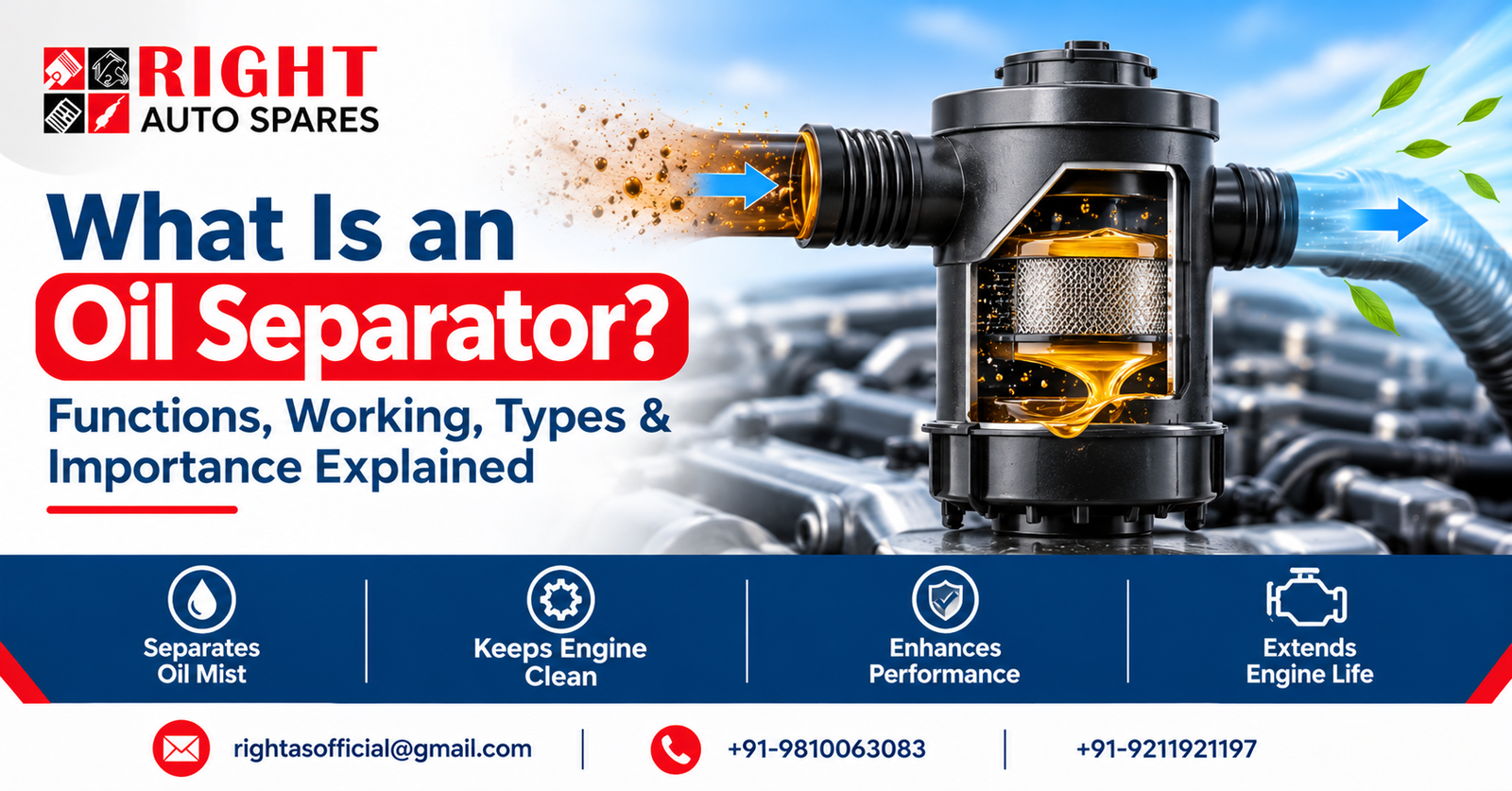


An oil separator removes oil mist and droplets from crankcase gases before they enter the engine's intake or ventilation system. It helps reduce oil consumption, prevent oil deposits, and maintain proper crankcase ventilation.
During engine operation, gases escaping past the piston rings carry small oil droplets. An oil separator captures these droplets and allows the collected oil to return to the engine in systems designed for oil recovery.
This guide by Right Auto Spares explains how oil separators work, their types, functions, maintenance, and common problems.
What Is an Oil Separator?
An oil separator is an engine component that separates oil droplets from blow-by gases in the crankcase ventilation system.
It helps prevent excessive oil from entering intake pipes and other engine components. Depending on the engine design, the separated oil returns to the lubrication system.
Oil separators are commonly used in cars, trucks, diesel engines, and heavy-duty machinery.
Why Is an Oil Separator Important?
An oil separator helps maintain effective crankcase ventilation and reduces oil contamination in the intake system.
- Reduces oil mist entering the intake.
- Helps control oil consumption.
- Prevents excessive oil deposits.
- Supports proper crankcase pressure.
- Helps protect intake components.
Functions of an Oil Separator
- Oil Mist Removal: Separates oil droplets from crankcase gases.
- Oil Recovery: Returns collected oil to the engine where the design allows.
- Crankcase Ventilation: Supports proper movement of blow-by gases.
- Intake Protection: Reduces oil deposits in intake components.
- Pressure Management: Works with the ventilation system to maintain appropriate crankcase pressure.
Parts of an Oil Separator
- Housing: Holds the separator components.
- Separation Element: Captures oil droplets.
- Baffles: Help separate oil through changes in gas direction.
- Oil Drain: Returns collected oil to the engine.
- Inlet and Outlet: Allow crankcase gases to enter and exit.
- Pressure Valve: Regulates ventilation pressure in certain designs.
How Does an Oil Separator Work?
- Blow-by gases enter the separator.
- Oil droplets are separated from the gas.
- Collected oil drains back into the engine where applicable.
- Cleaner gases move towards the intake or ventilation outlet.
Depending on the design, separation takes place through baffles, specialised filter media, or centrifugal force.
Types of Oil Separators
- Baffle-Type: Uses internal plates to separate oil droplets.
- Labyrinth-Type: Uses multiple passages to collect oil mist.
- Centrifugal: Uses centrifugal force for oil separation.
- Coalescing: Uses filter media to combine small oil droplets.
- Integrated: Built into the valve cover or crankcase ventilation assembly.
Oil Separator Comparison Table
|
Type |
Main Feature |
Common Application |
|
Baffle |
Simple mechanical separation |
Engine ventilation |
|
Labyrinth |
Multiple gas passages |
Automotive engines |
|
Centrifugal |
Centrifugal separation |
Heavy-duty engines |
|
Coalescing |
Fine oil mist capture |
Diesel engines |
|
Integrated |
Compact built-in assembly |
Modern engines |
Symptoms of a Bad Oil Separator
- Increased oil consumption.
- Oil deposits in intake pipes.
- Excessive crankcase pressure.
- Oil leaks around engine seals.
- Unusual smoke from the exhaust.
- Whistling or hissing from the ventilation system.
These symptoms may also indicate other engine problems, so inspection is necessary.
Oil Separator Maintenance
- Follow the manufacturer's service schedule.
- Inspect ventilation hoses for blockage.
- Check the separator for damage.
- Keep oil drain passages clear.
- Replace serviceable elements when required.
- Verify proper installation and sealing.
Advantages of an Oil Separator
- Reduces oil carryover.
- Helps maintain cleaner intake components.
- Supports crankcase ventilation.
- Helps control oil consumption.
- Reduces oil-related deposits.
Disadvantages of an Oil Separator
- Can become blocked.
- May require replacement.
- Faulty operation can affect crankcase pressure.
- Some designs require complete assembly replacement.
What Happens If an Oil Separator Fails?
A faulty oil separator can allow excessive oil into the intake system or restrict crankcase ventilation. This may cause increased oil consumption, oil leaks, and abnormal crankcase pressure.
Timely replacement helps prevent further ventilation-related problems.
How to Choose the Right Oil Separator
- Check the engine make and model.
- Verify the OEM part number.
- Match the correct separator design.
- Confirm dimensions and connections.
- Check crankcase ventilation compatibility.
- Determine whether an element or complete assembly is needed.
Why Choose Right Auto Spares?
Right Auto Spares supplies automotive and industrial spare parts for commercial vehicles, construction machinery, agricultural equipment, and other applications.
For oil separator requirements, buyers should confirm the engine model, OEM reference, and component specifications before selecting a replacement.
Conclusion
An oil separator removes oil droplets from crankcase gases, helping control oil consumption and maintain proper engine ventilation.
Regular inspection and the correct replacement part help prevent oil deposits, leakage, and crankcase pressure problems.
FAQs
- What does an oil separator do?
It removes oil mist from crankcase gases before they enter the engine's intake or ventilation system.
- Where is an oil separator located?
It is usually part of the crankcase ventilation system, sometimes integrated into the valve cover.
- What are the symptoms of a bad oil separator?
Common signs include oil consumption, oil leaks, intake oil deposits, and abnormal crankcase pressure.
- Can a bad oil separator cause oil leaks?
Yes. A blocked separator can increase crankcase pressure and contribute to oil leakage.
- How often should an oil separator be replaced?
Follow the engine manufacturer's maintenance instructions. Replacement intervals vary by design.
- Is an oil separator the same as an oil filter?
No. An oil separator removes oil droplets from crankcase gases, while an oil filter removes contaminants from engine oil.
- Can an oil separator be cleaned?
Some designs allow servicing, while others require replacement. Follow the manufacturer's instructions.
- How do I choose the right oil separator?
Match the engine model, OEM reference, separator design, and connection specifications.