
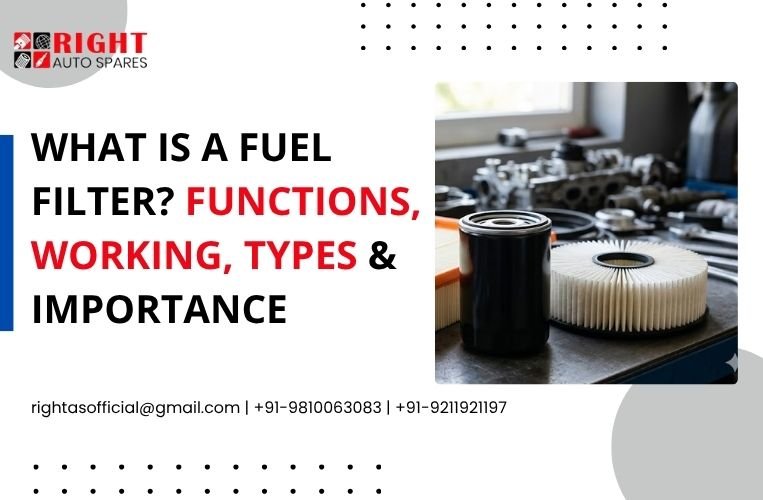
A fuel filter is a device that removes dirt, rust, debris, and water from fuel before it reaches your engine, ensuring smooth performance and preventing damage.
A vehicle depends on clean fuel for proper combustion. Even small impurities can disrupt this process. This is why the fuel filter plays a central role in protecting the engine, maintaining efficiency, and reducing long-term repair costs.
This guide by Right Auto Spares explains everything you need to know about fuel filters in a clear and practical way.
What Is a Fuel Filter?
A fuel filter is a component installed in the fuel line that removes impurities such as dust, rust, debris, and water from fuel before it reaches the engine.
Fuel does not remain perfectly clean from production to combustion. During storage, transport, and refueling, it collects contaminants. If these particles enter the engine, they can block injectors, damage fuel pumps, and disturb combustion.
The fuel filter acts as a controlled barrier. It allows clean fuel to pass while trapping harmful particles inside a filtration medium, usually made of treated paper or synthetic material.
Why Fuel Filtration Matters More Than Ever
Modern engines operate under high pressure and precise fuel delivery systems. Even a microscopic particle can affect performance.
- Disrupt fuel spray patterns
- Reduce combustion efficiency
- Cause injector wear
- Damage high-pressure pumps
- Increase emissions
Fuel filtration is no longer just a maintenance component. It is a requirement for engine reliability and efficiency.
Functions of a Fuel Filter
- Removing Solid Contaminants: Traps dirt, rust, and metal particles.
- Protecting Fuel Injectors: Ensures proper spray patterns.
- Preventing Water Entry: Important for diesel systems.
- Maintaining Fuel Flow: Ensures uninterrupted supply.
- Supporting Combustion: Improves mileage and reduces emissions.
Parts of a Fuel Filter
- Housing: Outer shell protecting internal components
- Base Plate: Connects to the fuel system
- Filter Media: Core filtration material
- Center Tube: Allows filtered fuel flow
- End Caps: Secure filter media
- Compression Spring: Maintains pressure
- Gasket: Prevents leakage
- Drain Valve: Removes water in diesel filters
- Water Sensor: Detects water presence
- Strainer: Pre-filters larger particles
How a Fuel Filter Works
- Fuel is drawn from the tank
- It enters the fuel filter
- Passes through filter media
- Contaminants are trapped
- Clean fuel exits through the center tube
- Fuel reaches the engine
In diesel filters, water separates and settles at the bottom, which can be drained manually.
Types of Fuel Filters
- Inline Fuel Filter: Installed in fuel line
- In-Tank Fuel Filter: Located inside fuel tank
- Cartridge Filter: Replaceable element
- Spin-On Filter: Easy installation design
- Diesel Fuel Filter: Includes water separator
- Gasoline Fuel Filter: Removes solid impurities
- Canister Filter: Fully replaceable unit
Fuel Filter Comparison Table
| Type | Location | Key Feature | Best For |
|---|---|---|---|
| Inline | Fuel line | Easy replacement | Older petrol vehicles |
| In-Tank | Fuel tank | Long lifespan | Modern vehicles |
| Cartridge | Separate housing | Replaceable element | Eco-friendly |
| Spin-On | Engine compartment | Easy install | Diesel engines |
| Diesel | Fuel system | Water separation | Diesel vehicles |
| Gasoline | Fuel line | Simple filtration | Petrol vehicles |
| Canister | Sealed unit | Full replacement | General use |
Symptoms of a Bad Fuel Filter
- Difficulty starting
- Loss of power
- Engine misfires
- Poor fuel economy
- Rough idling
- Engine stalling
Fuel Filter Maintenance
- Replace every 20,000–40,000 km
- Use high-quality filters
- Drain water in diesel filters
- Check for leaks
Advantages
- Protects engine components
- Improves fuel efficiency
- Enhances performance
- Reduces emissions
- Extends component life
Disadvantages
- Can clog over time
- Needs replacement
- May cause starting issues if faulty
What Happens If You Don't Replace It?
- Restricted fuel flow
- Injector damage
- Fuel pump strain
- Engine failure (severe cases)
How to Choose the Right Fuel Filter
- Check compatibility
- Look at micron rating
- Ensure proper flow capacity
- Choose strong build quality
- Consider water separation (diesel)
Real-World Importance
Fuel contamination is common due to dust, storage conditions, and fuel quality. Commercial and heavy-duty vehicles face higher risks, making high-efficiency filtration essential.
Why Choose Right Auto Spares
- Consistent filtration performance
- Reliable fuel flow
- Long service life
- Wide compatibility
Conclusion
A fuel filter is a small but essential component that protects your engine and ensures smooth operation. Clean fuel improves combustion, reduces wear, and extends engine life.
With modern engines becoming more sensitive, proper fuel filtration and regular maintenance are critical for long-term reliability.
FAQs
What does a fuel filter do?
Removes impurities from fuel.
How often to replace
Every 20,000–40,000 km.
What happens if clogged?
Reduced performance.
Can car run with bad filter?
Temporarily, but not recommended.
Signs of bad filter?
Power loss, stalling, poor mileage.
Diesel vs petrol filter?
Diesel includes water separation.
Does it improve mileage?
Yes, indirectly.
Can it be cleaned?
Usually no.
Where is it located?
Fuel line, tank, or engine area.
How to choose?
Match specs and quality.